October 8, 2026
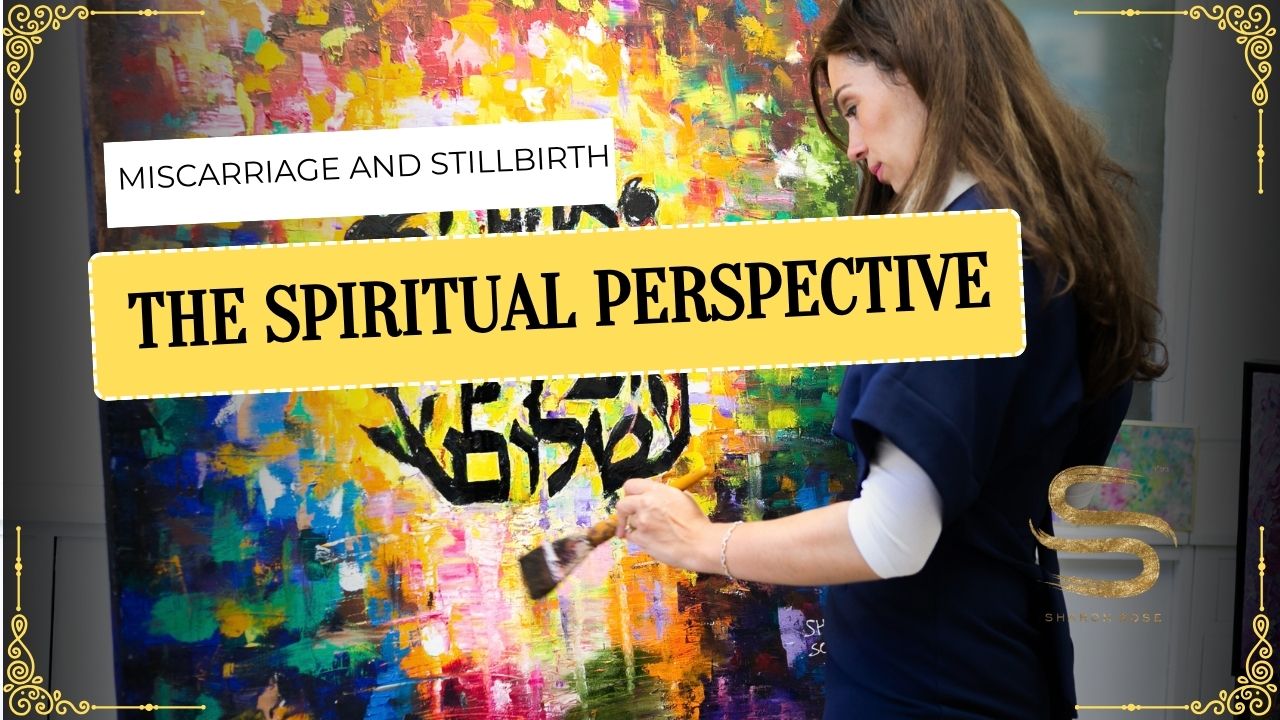
I attach below the transcript of the video I made in 2020: https://www.youtube.com/watch?v=_U_COsQAp5A&t=11s
Opening
Hey, thank you so much, everyone, for joining me tonight. It’s very much appreciated. Let’s get started.
I need to start by saying I’m not a medical professional, and I shouldn’t really be discussing this. There are plenty of people who are far more qualified and educated who should be giving this talk. And yet I have presented this information to so many charities and organizations, and so many Instagram profiles, and no one wants to talk about it, for all sorts of reasons. So we came to the end of 2020, which is now, and I said: no one else is going to talk about it, so I guess I have to. Here I am.
My only experience, and the only reason I can talk about it, is that my daughter was stillborn. I’ve also had miscarriages, so I know the experience, but that is my only credential.
I also need to emphasise that everything I’m going to talk about is not my own thinking or my own concept. These are ideas that were presented to me by incredible, spiritually amazing people, and I’m simply relaying them in a more accessible format, so that what happened to me and my husband doesn’t need to happen to other people.
Our story
We were very badly informed at the time. This was five years ago, in 2015. No one really knew what to do or what to say, what the customs were, what the traditions were, what the halacha was. It wasn’t like there was a guidebook. I was 37 weeks along when I found out that my baby had died inside me, and it wasn’t as if someone said, “Okay, so now this is what we’re going to do.” It didn’t work like that. It was crazy, it was manic, it was awful. Along the way, so many things happened that should not have happened. If someone had simply told me and guided me and explained what I’m going to explain to you tonight, it would have been different.
That was 2015, and now it’s 2020. It has been five years of learning, and of trying to speak to all sorts of people across the world, [including in Israel], and really important Jewish leaders, to understand this from a Jewish standpoint. And why a Jewish standpoint? I’m a very spiritual person and a religious person, so everything I do and everything I experience is within the viewpoint of my religion: that everything has a reason and a spiritual consequence, that there is beauty in everything, and that there is a God orchestrating the world. My eldest daughter did not die for the sake of it.
Everyone who told me at the time that it was time to move on, to forget about it and quickly have another child: that is wrong. It’s so important to understand what a miscarriage is and what a stillbirth is, so that we can take that into our lives. We internalize the message, and our mission as part of this baby’s life, and take it with us. You’re going to have the grief. It’s going to be a horrible, tragic situation. In our case, we had baby things at home, and people said, “Just get rid of it now.”
We then spent many years until we were blessed with living children. The whole process was tragic and awful. But the concepts I’m going to run through with you now have really helped me and given me such peace, and I’m sharing them with you.
Where this comes from
I want to give a shout-out to the main people who put these ideas together.
First, [Rabbi Tatz, who spoke on this topic in 2017–18 at my request. His daughter, Rebetzin Ruthie Halberstadt (https://rebbetzinruthie.com/) is the reason I’m smiling today. She has got me through everything. She is an incredibly spiritually in tune, phenomenal person.
Rabbi Tatz put me in touch with Rabbi Zimmerman, who was at the time the head of the Gateshead community and is now head of the Federation. There’s also Rabbi Smith from Telstone, who is a Rabbi in Neve, and Dayan Dunner, one of the main rabbonim in the UOHC (Adass). And Rebbetzin Dunner, daughter of Rabbi Ehrentrau, who is just an angel. She is the most amazing, wonderful woman ever to walk this planet.
Two written sources have also really helped me. The first is an article by Rabbi Jason Weiner. I only found it in 2020, and part of the reason I’m comfortable giving this presentation is that he has written much of what I’m talking about tonight in such a beautiful way. I asked him, and he has given me permission to share his article. It’s a phenomenal resource for the Jewish community, because we didn’t have anything like it until I found it. It’s part of his larger book, The Jewish Guide to Practical Medical Decision-Making.
The second is an article by Rabbi Moshe Wolfson, published in The Jewish Observer in 1995. It’s another really powerful piece, and again it’s part of what we’re going to talk about tonight.
The first point: a pure soul
I want to specify that there is a distinction between a child who is born and lives for 30 days, and any child before that who doesn’t live for 30 days. That covers children who are born and die after a day or two, stillborn children (roughly after 20 to 25 weeks of pregnancy), and miscarriages. For any child who dies before those 30 days, there is a gray area in halacha.
The reason, in Jewish law, is that in the olden days, children died all the time. Pregnancy was dangerous, childbirth was dangerous, even keeping children alive and well was dangerous. You couldn’t sit shiva all the time. You couldn’t have all of these losses, all of these deaths, all the time, because it happened all the time. So a distinction was made between children who died before those 30 days and those who died after.
This is the first thing I want to share with you. I’m going to read word for word from Rabbi Weiner’s book. Listen:
The pure soul of the fetus or newborn never completely entered the human realm and thus never severed its total attachment [to God]. The soul remains pure and holy. It goes straight back to heaven, and at the end of the world it will return in the resurrection of the dead.
Hello!
Now I’m going to read you the same concept, which I’ve intentionally left on the screen, from Rabbi Moshe Wolfson:
Some neshamos belong to a very exalted class. They are of such sublime nature, so holy, sparkling and brilliant, that they simply cannot bear to exist in the world even for a short time.
Guys, why weren’t we told this earlier? For all of you who have had a miscarriage, all of you who have had a loss: you are an exalted class. You have had the privilege of carrying a child who was too pure and too holy for this world. They didn’t need to be on this earth. They had a mission to accomplish, and it required them to be here for five weeks, three months, nine months, and at the end of that they go straight back to heaven.
Hello! Do you know what a privilege that is? What a big deal that is?
In my case, yes, I would have loved to bring up my eldest daughter. I would love to have got to know her. But it’s really important to remember that I am still her mother, and at 120, when I go up, she will come and greet me as my daughter, because I am her mother. My role as her mother was simply to look after her for nine months. In my case I had hyperemesis gravidarum, so it was a horrible pregnancy. I committed nine months of my life to her, and my husband did too. As parents, we did what God wanted from us, and what we needed to do for our eldest, which was to look after her for those 37 weeks. And that was that.
Once you start to put your horrible, rubbish miscarriage or stillbirth into perspective, and realize that they are pure souls that we’ve had the privilege of looking after for a short while, it’s actually a wonderful experience. Obviously, outside of this spiritual side, it’s horrible, it’s dreadful, it’s hell. It’s the grief and the loss and the death and the corpse. It’s just terrible. But the privilege of it is incredible and amazing.
That’s why I think it’s so important to frame this whole topic with that brush, because then all the questions and concepts and problems that come from it are so much easier to answer. I get so angry when people say, “No, we’re not going to talk about it.” If, God forbid, it happens to someone, they’ll ask their rabbi and find out what is and isn’t allowed. Guys, with most things it’s not even about what’s allowed. Once you appreciate that they are a pure soul, the things you feel you want to do are no longer relevant, or, if they are relevant, you’re doing them for you, not for the baby, because the baby’s soul does not need them.
The second point: the baby’s soul is perfect, so it doesn’t need so many rituals
This is where we come to the second point: the soul is perfect, and therefore it does not need so many rituals.
When someone dies, we have a whole process for them. We have the levaya, elevating their soul. We have speeches, elevating their soul. We sit shiva and mourn, we tear our clothes, we say Kaddish, all elevating their soul, because they need a boost to get up to heaven and finish off their life up there. But the babies we’ve miscarried don’t need that, because they’re perfect and pure. They go straight up to Him, and they don’t need our rituals. If we want to do them, great, go for it. If sitting shiva is going to help me with my mourning, great, go for it.
For example, we were so misguided at the time. When our daughter was born, we had the most amazing doula, Simcha Coltof, who works in Israel. She was incredible, and she pushed us to do things. We were like, “Oh my gosh, we’re doing an aveira, we’re doing such terrible things.” Hugging your baby, kissing your baby, bathing your baby. A cuddle cot, which keeps the baby’s body warmer for longer. Taking photos with them, cutting their hair, taking hand and footprints. All of those things: go for it.
There is a custom of not taking photos of the dead, of a corpse, but there is so much more to take into account. There is medical research saying that sitting with your baby who has died and saying goodbye has massive long-term benefits. And so most Rabbonim will say that if it’s what brings you calm and comfort, go for it.
The only two things I’ve thought about, in all my discussions, are niddah and an autopsy of the baby. Those two need a rabbi’s opinion. Otherwise, the rest is all spiritual and mystical. Once you have the concept in your mind that the baby is pure, then if you need to, because you’re human, say goodbye to the baby, really mourn the baby, give the child a name: go for it. That will give you comfort and help you grieve.
I’m going to share the article by Rabbi Weiner, where he goes through it, “yes, no, yes, no.” There is so much to be said on it, but when it comes down to it, it’s much simpler than you would think. It’s really about what the parents need at that point in time.
The third point: burial, and not tethering the soul to this earth
I get asked all day long about burial and that whole process, so here’s a quick run-through. In London we had options. We didn’t know it at the time, but I’m telling you now: you have options. There’s the Adass, there’s the Federation, there’s United Synagogue, depending on where you are, and there are Masorti, Conservative and Reform communities. I looked into all of them.
The Adass, which is the one we went with (just out of default because our synagogue belong to the organisation), doesn’t tell you where the baby is buried, doesn’t tell you the name they give the baby, and doesn’t tell you when they are going to bury the baby. The reason is this third concept: we try not to tether the baby’s soul to this earth.
What does that mean? Because the baby is pure, we want the baby to go straight back up to heaven, and we try not to pull the soul back down to earth or give it too much attachment to it. This is custom, not halacha. The idea is that if we know where the baby is buried, we are tethering the baby’s soul to its body too much, and that keeps the baby down on this earth too much. This is all spiritual. If that resonates with you, great, go for it. If it doesn’t, you need to know that the Adass may not be the right burial society for you.
With the Federation, as I understand it, the parents don’t attend the burial themselves (again, this is custom, not halacha), but they allow you to send someone in your place. They allow you to know where the baby is buried, and I think to know the name, or to name the child yourself. In general, the Chevra Kadisha will give the child a name that isn’t very common, to mark the distinction between a child who stays in this world and a child who goes straight to heaven.
United Synagogue allows you to be at the burial yourself, to have a whole levaya, and to speak.
Reform, Conservative and Masorti/Liberal are exactly the same: you’re allowed to have a plaque, you’re allowed to speak and to give a eulogy. You can do all of these things. The baby doesn’t need them, but you can.
The fourth point, and questions I’m asked
That brings me to my fourth point, which comes straight from Rabbi Wolfson himself: some neshamos are born to go straight to Olam Haba, straight to heaven, as opposed to most of us, who have to struggle through this world.
I’ll finish with some of the questions I get asked, always with this concept in mind.
Lighting candles on Shabbos. It’s not customary. I felt really guilty at the time, because once she died I thought I should be lighting a candle for her every Friday night. Then, as the years went by, I found out that it’s not the custom, and that the baby doesn’t need it. This is so important. When you light candles for your children, you are bringing light and sparking their souls. But my eldest daughter doesn’t need me to spark her soul, because she is pure and holy, so she doesn’t need my Friday night candle. But I want to light a Friday night candle for her and so I do. I’ve spoken to so many people about this. One person I remember lit the candle, and then the wind blew and it went out, so she never lit a candle for her child again, and she’s okay with that. It’s all about what resonates with you.
Naming. Did we name her? No, we didn’t. Should we have? Again, we didn’t need to, but I think we would have liked to know that it was allowed.
Yahrzeit. Do we observe a yahrzeit? Yes, we do, but again, no yahrzeit observance is needed, because there is no change in the status of the soul, whereas for others it helps the soul through the yearly stages of elevation. If you want to, great, go for it.
I don’t know why people make such a big deal of this, because it’s so much more straightforward than it should be, unless I’m totally missing something.
Closing
I think that’s really what I wanted to say. Those four main points are so important and so practical:
- The pure soul of the fetus or newborn never completely entered the human realm and never severed its connection with Hashem, and therefore it goes straight back up to heaven.
- The soul is perfect, and therefore we don’t need so many rituals.
- We try not to tether the baby’s soul back to earth.
- Some souls are born to go straight to heaven, as opposed to most of us, who have to struggle.
I’ll end with a sefer that helped me tremendously, Shaar Hagilgulim, which is all about the reincarnation of souls, again and again. It gives you a flavor of understanding that the death of your baby is part of a much larger picture. It’s so much bigger than how we talk about it right now. There is also something Rabbi Wolfson mentions, which I’ll touch on briefly: there is a concept that a certain number of souls need to come into this world before the Messiah, and your baby may be one of those souls that needs just a tiny bit of rectification in this world. They’re here for 5, 6, 7, 10, 15, 20 weeks, and then they go straight back up to heaven.
I really hope this has been helpful. I would implore you to share this with people who need it, probably a year after they have suffered a loss. Before that, they need to mourn and really process the emotion. Positivity, and “Oh my gosh, that was meant to be, don’t worry, it was amazing, you’ve had a real privilege”, doesn’t land at first. Yes, it’s a privilege, but I didn’t want this privilege. I got it, and so I’ve had to look into it and understand it, but it wasn’t something I wanted. The truth is, if someone had presented this to me right at the beginning, I probably would have been okay with it, but that’s just me. So, to be on the safe side, please share this, and do it thoughtfully.
There were tons of other questions, about how you can help your friends, and about rainbow babies. We’ll talk about that another time, because it’s a separate conversation. I really thank you all for joining tonight. Thank you, thank you, thank you. Comment below, I’d love to hear what you think. Have a good night.
Related
instagram
Check out my
All Images are Copyright © All artwork is the sole property of Sharon Rose Art and is held under copyright (even after purchase). The images, artwork, and contents of this website may not be copied, collected or used for personal or professional gain without the written permission from Sharon Rose. All images of artwork, sold or otherwise, are retained by Sharon. Portraiture and Photos of Sharon in the Studio all by Gaby Ekaireb and Yoav Pichersky. Rome Collection photos by Sophy Weiss. Other photographers are: Yaffa Judah, Yoav Pichersky.
YOUTUBE
subscribe on
studio updates
stay a awhile + read
elsewhere: